

When installing hardwood flooring, what is better staples, cleats, or nails?
Posted: November 24, 2025Author – Ryan Palma Owner/CEO Sustainable Lumber Co.
Click on these links to view our extensive line of sustainable hardwood flooring, or email us for a pricing quote, or call us at (406) 642-7120
What is the difference between cleats, staples, and nails when installing hardwood flooring. Is one better than the other?
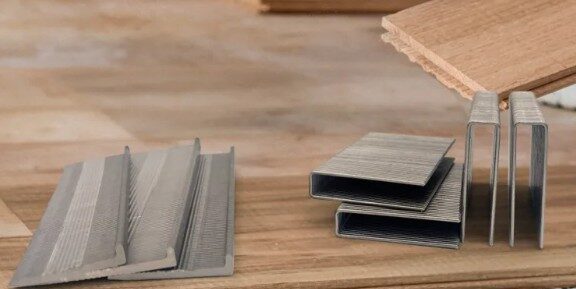 When installing hardwood floors, the terms “nails,” “cleats,” and “staples” refer to different types of fasteners used in the nail down the hardwood floor to the subfloor (typically plywood, OSB, or joists). In modern installations, all three are installed by using a pneumatic tool for efficiency and precision. “Nails” in this context often mean specialized flooring nails (sometimes called finish nails for flooring, though distinct from trim finish nails), which are straight shank fasteners optimized for wood. Cleats are a subtype of flooring nail with enhanced features, while staples are a separate U-shaped design. Here’s a breakdown of the differences, based on industry standards.
Key Differences
- Nails (Flooring Nails): These are straight, often ring-shank or barbed for grip, and driven at a 45-degree angle through the tongue of the plank into the subfloor using a pneumatic nail gun. They’re designed for secure hold while allowing some wood movement, but lack the specialized head shape of cleats. Depending on the thickness of the flooring, typically a 1-1/2″ – 2″ long nail is used.
- Cleats (Cleat Nails): These are L- or T-shaped flooring nails with a barbed or serrated shank for superior grip and a smooth upper portion to permit natural wood expansion/contraction. Typically 16- or 18-gauge, they’re also installed at a 45-degree angle with a pneumatic nailer.
- Staples: U-shaped fasteners with two prongs and a crown, usually 15.5- or 16-gauge, installed pneumatically for a rigid, dual-point hold.
Pros and Cons
The choice affects durability, installation speed, cost, and issues like squeaks or splitting. Factors like wood type (e.g., hard vs. soft), climate, and manufacturer guidelines play a role, always check warranties, as some void coverage for incompatible fasteners.
| Fastener | Pros | Cons |
| Nails (Flooring) | Affordable; good for basic holds in softer woods; allow moderate wood movement; easy to source and install with pneumatic tools. | Less grip than cleats in dense woods; higher risk of loosening or squeaks over time; not as optimized for humidity changes. |
| Cleats | Stronger holding power with serrations to prevent withdrawal; better for harder woods like Oak and Hickory; allow natural expansion to reduce cracking or splitting; minimize long-term squeaks; preferred for variable climates. | More expensive than staples; may require specific nailers; slightly slower if adjusting for wood density. |
| Staples | Cheapest and fastest to install; strong initial grip for softer or engineered woods; widely available. | Can restrict movement, causing tongue splits, cracks, or loosening in humid areas; more prone to squeaks and damage in hardwoods; harder to remove for repairs; some manufacturers don’t recommend or warranty them for solid hardwood. |
Is One Better Than the Others?
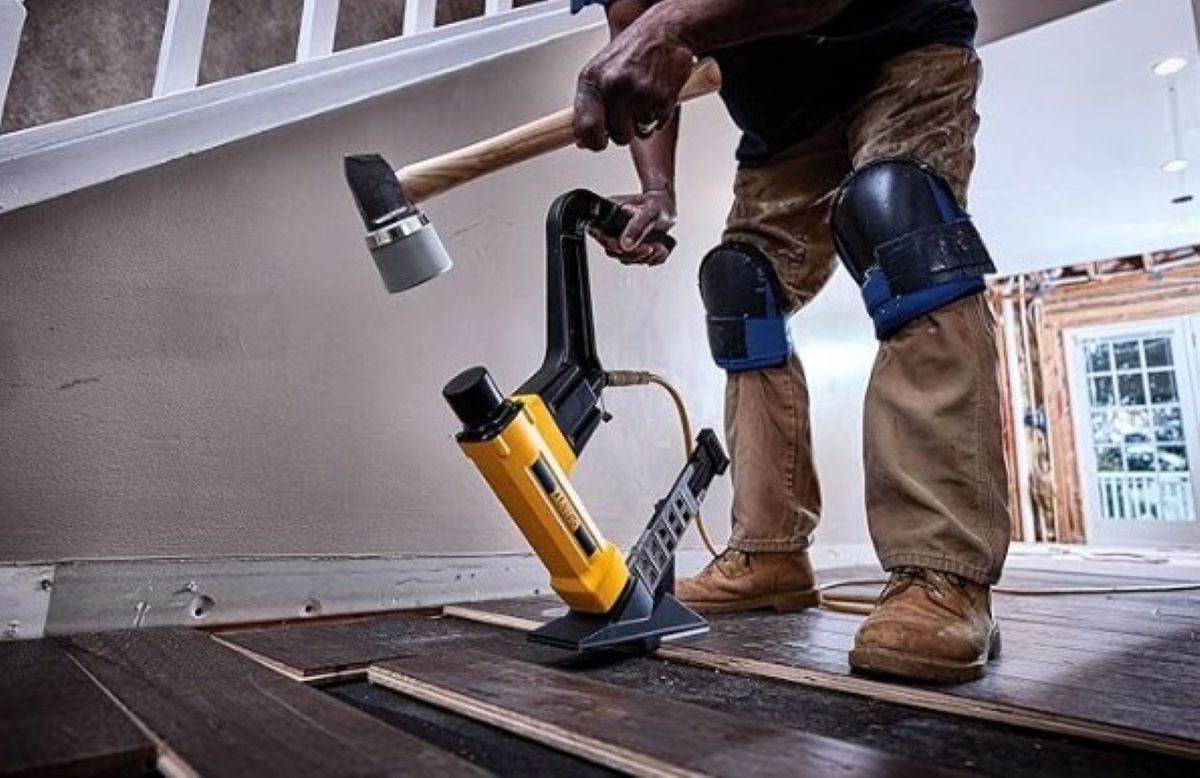 No single option is universally best, it depends on your project. Cleats are often recommended as superior for solid hardwood, especially in fluctuating environments, due to better long-term performance and reduced issues. Staples work well for budget friendly, quick jobs on softer woods or stable climates but may lead to more problems. Standard flooring nails fall in between but are less common than cleats for optimal results. Use proper sizing, spacing (e.g., 1″-3″ from each end and 6″-8″ inches apart), and pneumatic pressure, and follow National Wood Flooring Association guidelines for best outcomes.
Contact Us for a Quote
Our knowledgeable team is here to answer any additional questions you may have. Call us today for a free quote on our sustainable wide plank hardwood flooring at (406) 642-7120 or click here to submit an inquiry online. We look forward to helping you with your next project!