

How does the thermal modification process improve the durability of wood?
Posted: July 20, 2026A Deep Dive Into How Thermal Modification Dramatically Improves Wood Durability
The Science Behind Longer Lasting, Chemical Free Exterior Cladding, and Why It Matters for Montana Homes
Author – Ryan Palma Owner/CEO Sustainable Lumber Co.
If you’ve ever watched beautiful wood siding cup, crack, or start to rot after just a few Montana winters, you know the frustration. Freeze thaw cycles, summer heat, and wild humidity swings are tough on wood. Traditional treated lumber relies on chemicals. Exotic hardwoods come with high costs and long lead times. There’s a better way, and it’s called thermal modification.
At Sustainable Lumber Company, we’ve been researching and studying everything involved with thermally modified wood for years. Our own Montanafied™ line of thermally modified Engelmann Spruce siding is grown, modified, and stocked right here in Montana. In this post we break down exactly how the thermal modification process works, both at a practical level and deep into the molecular science, and why it produces some of the most durable, stable, and sustainable wood siding available today.
 What Is Thermal Modification?

Thermal modification is a chemical free process with a proven history that uses only heat and steam (in a carefully controlled, low-oxygen environment) to permanently change the properties of wood. Temperatures typically reach 180–230°C (356–446°F). No preservatives, no toxins, no leaching chemicals, just physics and chemistry doing the work that nature started.
The result? Softwoods like our Montana spruce gain durability and dimensional stability comparable to many naturally durable tropical hardwoods, while remaining fully renewable and local.
How Thermal Modification Improves Siding Durability
Four primary mechanisms make thermally modified wood dramatically more durable for exterior siding:
1. Dramatically Lower Moisture Absorption
Wood’s biggest enemy outdoors is water. Thermal modification reduces the wood’s equilibrium moisture content (EMC) by 40–60%. At typical outdoor relative humidity, TMW holds roughly half the moisture of untreated wood. Less moisture means far less swelling, shrinking, cupping, and checking; the movements that destroy paint, open joints, and create pathways for water intrusion.
2. Superior Decay & Insect Resistance
The process destroys the natural “food” that fungi and insects love, primarily the hemicelluloses and simple sugars in the wood. With their preferred nutrients gone, decay fungi (brown rot, white rot, soft rot) and many wood boring insects simply cannot thrive. The result is chemical free biological durability often rated Class 1 or 2 (very durable to durable) for exterior use.
3. Exceptional Dimensional Stability
Because the wood moves so much less with humidity changes, siding stays flatter, joints stay tighter, and finishes last longer. This is especially valuable in Montana’s extreme climate swings. Properly installed thermally modified siding routinely delivers 25–30+ years of service life.
4. No Chemicals, No Leaching, No Toxicity
Unlike treated lumber, thermally modified wood contains nothing that can leach into soil or water. It is safe for people, pets, and the environment, a perfect match for sustainable building projects and our commitment at Sustainable Lumber Company.
The Science: How Heat Permanently Rewires Wood
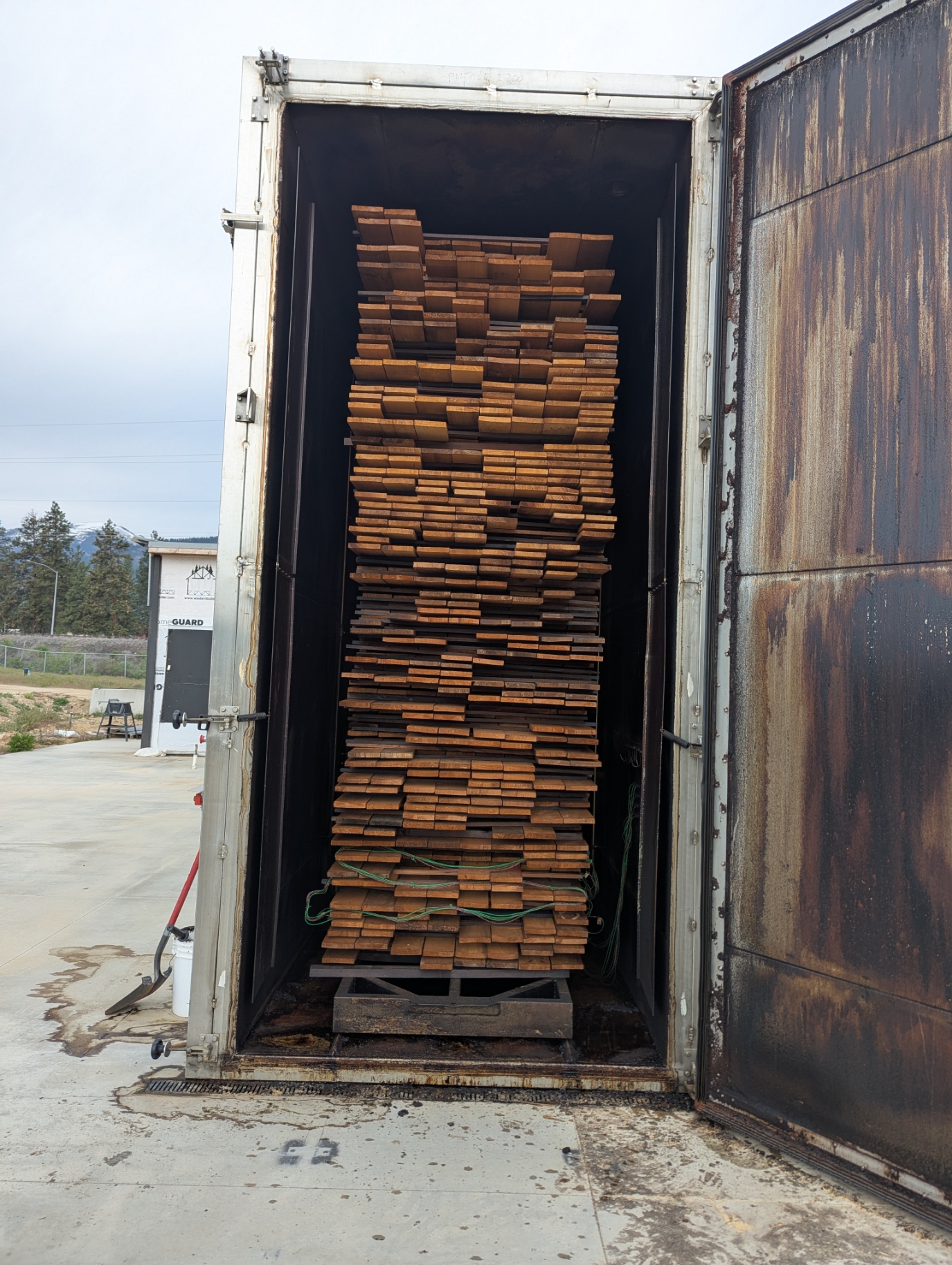 To understand why these improvements are permanent, we need to look inside the wood cell wall. Wood is a natural composite made of three main polymers:
- Cellulose (~40–50%) — crystalline microfibrils that give wood its tensile strength.
- Hemicelluloses (~20–35%) — amorphous, highly hydrophilic (water-loving) branched polysaccharides.
- Lignin (~15–35%) — the phenolic “glue” that holds everything together.
Hemicelluloses — The Primary Target
Hemicelluloses are the most thermally labile component. Starting around 160–180°C (and accelerating at higher temperatures), several critical reactions occur:
- Deacetylation — Acetyl groups are cleaved, releasing acetic acid. This creates an acidic environment inside the wood (often pH 2–4).
- Autohydrolysis — The acetic and formic acids catalyze cleavage of glycosidic bonds, depolymerizing hemicelluloses into smaller fragments.
- Dehydration — Especially under drier conditions, pentoses form furfural and hexoses form 5-hydroxymethylfurfural (HMF). These can further polymerize into hydrophobic residues that stay in the cell wall.
The net result is massive loss of the wood’s most hydrophilic (water attracting) polymer and a big reduction in free hydroxyl (–OH) groups that bind water. This is the single biggest reason thermally modified wood absorbs so much less moisture.
Cellulose — Mostly Stable, Slightly Improved
Crystalline cellulose is quite heat-stable up to about 230–250°C. Amorphous regions undergo limited degradation. Overall crystallinity usually increases because the amorphous material is preferentially removed and remaining microfibrils can pack more tightly. This contributes modestly to reduced moisture uptake and increased stiffness.
 Lignin — Rearranged and Cross-Linked
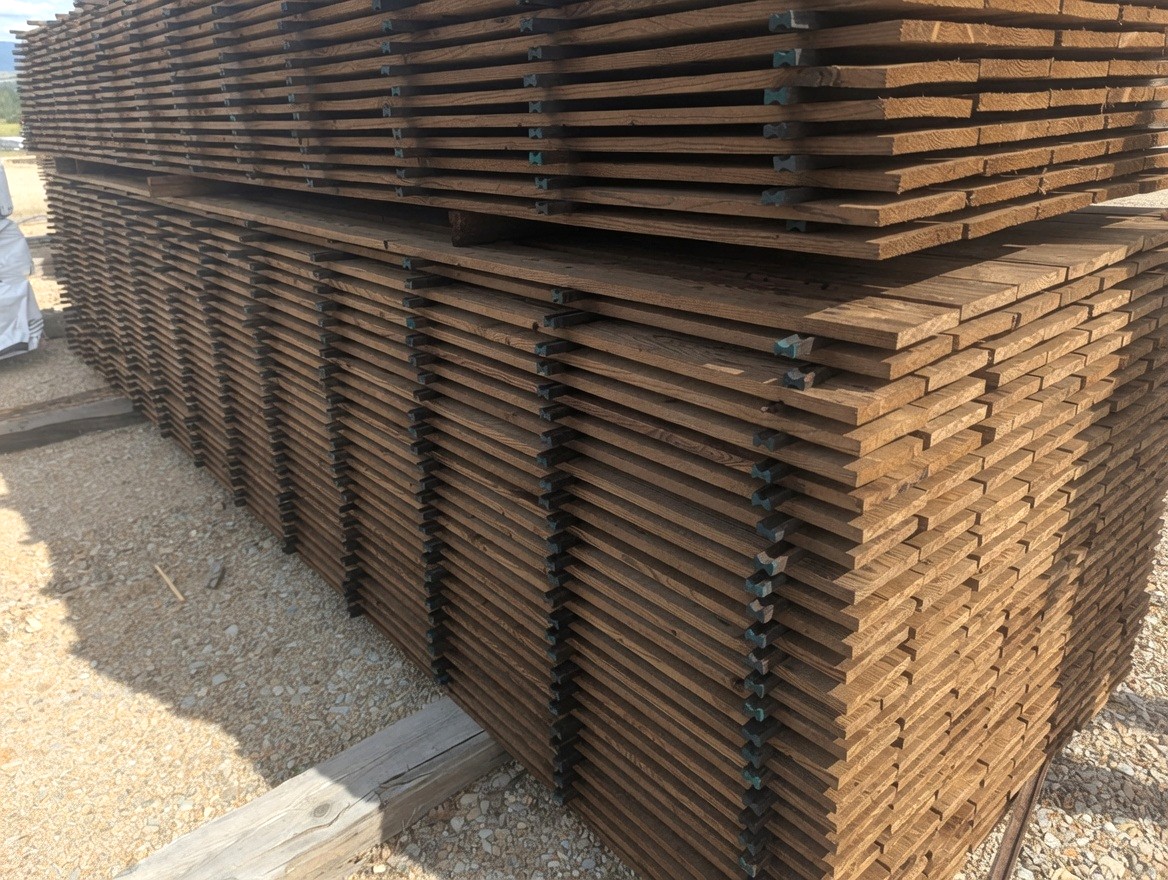
Lignin is more heat resistant but undergoes important structural changes:
- Cleavage of β-O-4 ether bonds
- Demethoxylation and increase in free phenolic hydroxyl groups
- Condensation / cross-linking reactions – new C–C bonds form, creating a more rigid, condensed network. Carbohydrate degradation products (like furfural) can also react with lignin under acidic conditions, adding further cross-links.
Relative lignin content rises because polysaccharides are preferentially lost. The denser, more cross linked lignin matrix further restricts water movement and polymer mobility.
Summary of Molecular Changes
These polymer-level transformations produce the performance gains we see in the finished product:
| Molecular Change | Primary Mechanism | Performance Benefit |
| Loss of hemicelluloses | Deacetylation + autohydrolysis + dehydration | Major drop in free –OH groups → lower EMC |
| Reduced free hydroxyls | Polymer degradation & condensation | 40–60% lower moisture absorption |
| Lignin condensation | New C–C cross-links + furfural reactions | Stiffer matrix, restricted swelling |
| Increased cellulose crystallinity | Preferential amorphous degradation | Slight stiffening & lower hygroscopicity |
| Cell-wall bulking by residues | Furfural polymers remain in situ | Physical restraint of dimensional change |
| Lower O/C ratio | Preferential carbohydrate loss | Improved biological durability |
In short: thermal modification is a controlled, partial pyrolysis that selectively dismantles the most water loving and biologically accessible components of wood while rearranging the remaining polymer network into a stiffer, less hydrophilic matrix. The wood’s relationship with moisture and microorganisms is fundamentally rewritten, permanently.
Why This Matters for Montana Homes, and Montanafied™ Siding
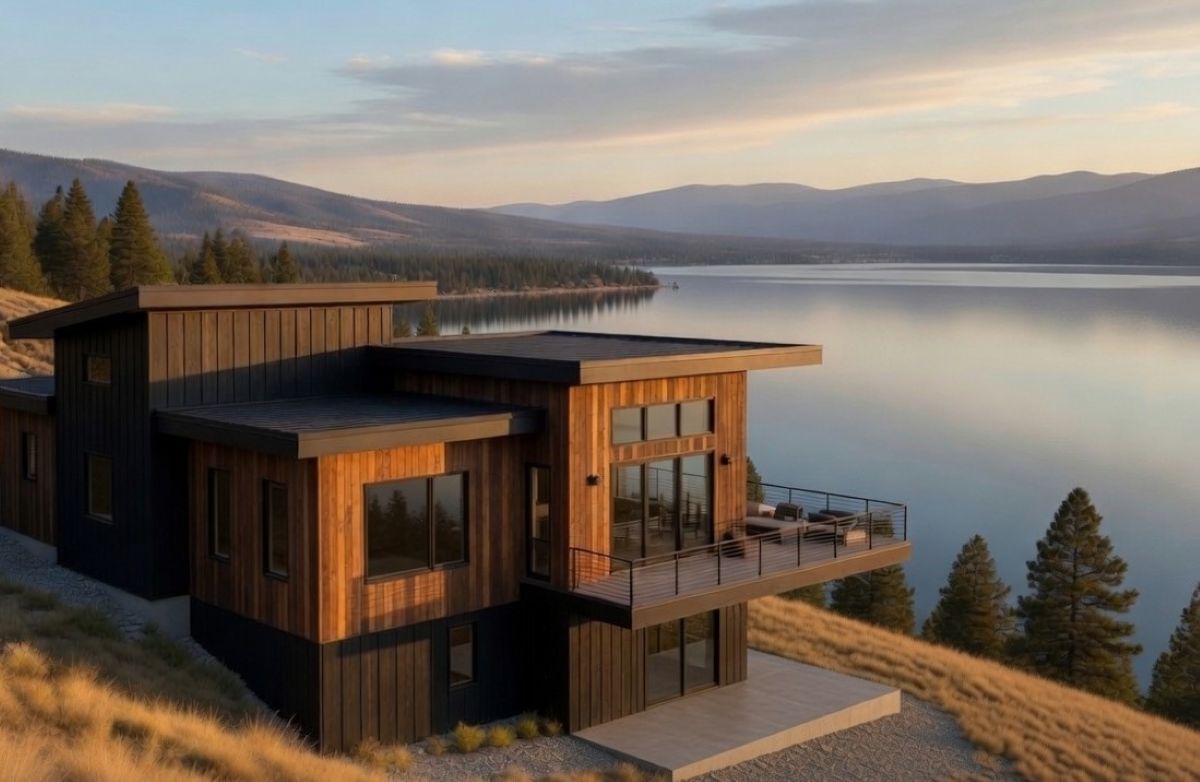 Montana’s climate is a torture test for exterior materials: intense UV, deep freezes, rapid thaws, dry summers, and sudden wet periods. Thermally modified wood thrives here because its low movement and high decay resistance handle exactly those conditions.
Our Montanafied™ thermally modified Engelmann Spruce takes the advantages even further. The spruce is sourced within ~150 miles of our facility, thermally modified to exterior grade intensity, and stocked locally. That means:
- True local supply chain — grown, modified, and sold in Montana. Lower carbon footprint than imported thermally modified wood or tropical hardwoods.
- In-stock availability — no long lead times. Popular nickel-gap T&G profile, in stock and ready to go.
- Performance engineered for our climate — the same science that makes thermally modified wood work worldwide is optimized for Montana conditions.
- Chemical free sustainability — supporting local forests and local jobs while delivering Class 1–2 durability.
Practical Notes for Builders & Homeowners
- Installation still matters — Proper ventilation, flashing, and fastening (stainless steel recommended) maximize the already excellent service life.
- Finishes — Thermally modified wood can be left to weather naturally to a beautiful silver-gray patina, or finished with a stain. Because the wood is more stable, finishes last longer.
- Mechanical properties — Thermally modified wood is more brittle than untreated wood. It is ideal for cladding and siding but not structural framing.
- Warranty — Quality exterior grade thermally modified wood typically carries 20–25+ year warranties against decay when properly installed.
The Bottom Line
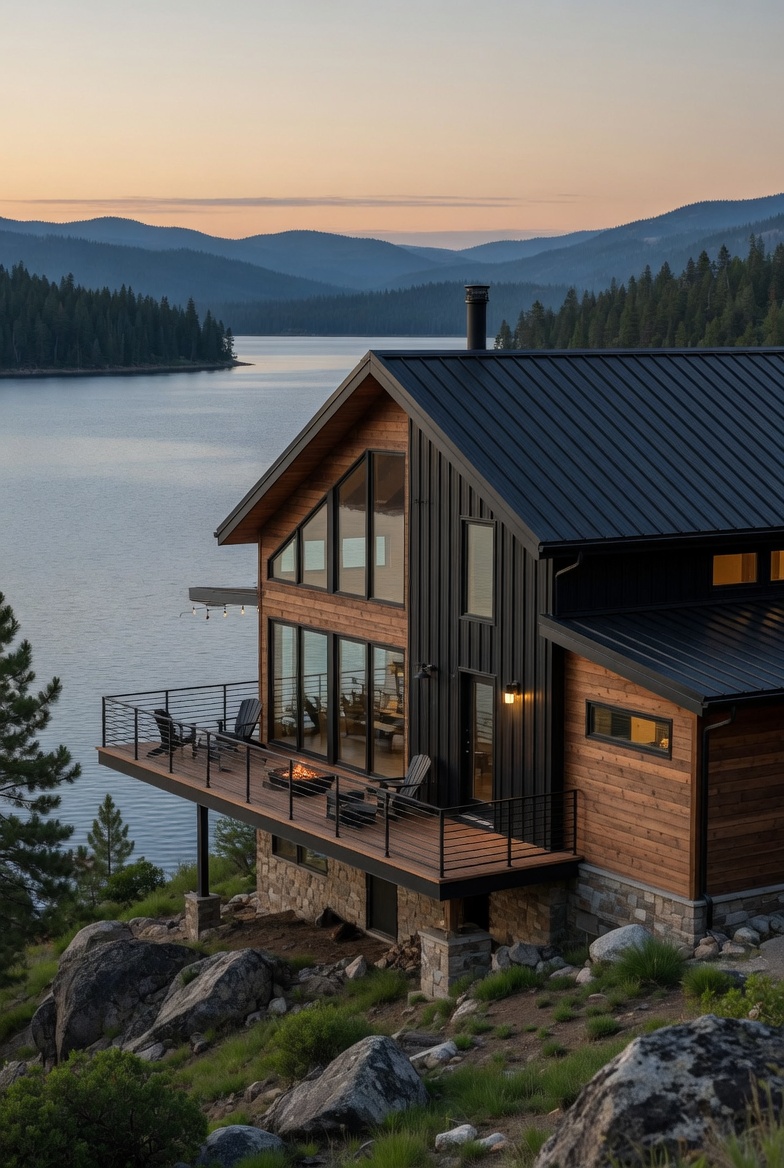 Thermal modification doesn’t just “treat” wood, it transforms it at the molecular level. By removing hemicelluloses, reducing free hydroxyl groups, and creating a more cross linked, less hydrophilic polymer network, the process delivers chemical free durability and stability that traditional wood simply cannot match.
For Montana builders, architects, and homeowners who want beautiful real wood siding that lasts for decades without toxic preservatives or overseas supply chains, thermally modified wood, especially our local Montanafied™ Spruce, is the clear choice.
Ready to see the difference? We’re happy to walk you through the science, the performance data, and how it can elevate your next project.
Questions?
Give us a call at (406) 642-7120 or stop by our showroom in Missoula. Our knowledgeable team at sustainable lumber is here to answer any additional questions you may have. Call us today or click here to submit an inquiry online. We look forward to helping you with your next project!
Montana Grown. Montana Made. Montana Tough.
Sustainable Lumber Company
2935 Stockyard Rd Ste. L-1 Missoula, Montana
406.642.7120 – sustainablelumberco.com